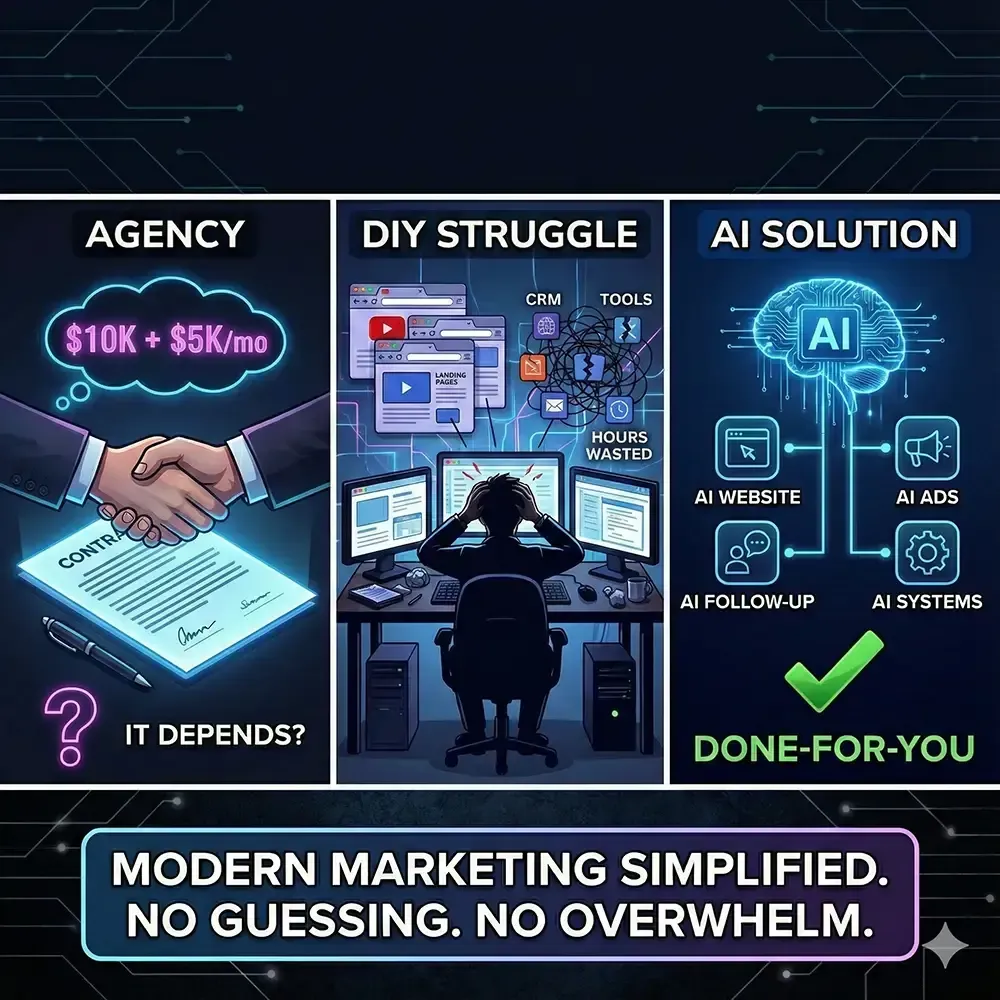
Digital Marketing in the Age of AI: How Smart Businesses Are Winning in 2026
Digital marketing has never stood still, but the last few years have changed the landscape faster than most business owners expected. AI is no longer a “nice-to-have” tool sitting on the sidelines. It’s now deeply embedded across almost every part of modern marketing — from strategy and content creation to lead generation, customer service, and sales automation.
What separates businesses that are growing from those that are struggling isn’t whether they use AI, but how they use it.
AI Is Not Replacing Digital Marketing — It’s Reshaping It
There’s a common fear that AI is here to replace marketers. In reality, the opposite is happening. AI is removing the repetitive, time-consuming work and allowing marketers to focus on strategy, creativity, and decision-making.
Tasks that once took days — like audience research, keyword analysis, ad testing, and reporting — can now be done in hours. That speed creates a competitive advantage, especially in crowded markets.
The real shift is this: digital marketing is becoming more systemised and data-driven, while still relying heavily on human judgement.
Smarter SEO and Content Strategy With AI
Search engine optimisation has evolved well beyond keyword stuffing and basic blog writing. AI tools now help analyse search intent, competitor gaps, content structure, and emerging trends long before they show up in traditional SEO tools.
Instead of guessing what to write, marketers can:
Identify questions people are actually asking
Map content to different stages of the buyer journey
Optimise for both search engines and human readers
Refresh old content based on performance data
When used properly, AI doesn’t write robotic content — it supports better planning, stronger structure, and more relevant messaging.
This is especially important as Google and other platforms move further toward experience-based and intent-driven search results.
Paid Advertising: Faster Testing, Better Results
One of the biggest advantages of AI in digital marketing is paid media optimisation. Platforms like Google and Meta already use AI behind the scenes, but businesses that layer their own AI-driven strategy on top consistently outperform those that don’t.
AI helps with:
Rapid creative testing (headlines, images, videos)
Identifying high-converting audience segments
Predicting cost-per-lead fluctuations
Improving ad relevance scores
Scaling winning campaigns faster
Instead of “set and forget” advertising, AI allows for constant micro-optimisation, which is essential as ad costs continue to rise.
AI-Powered Websites Convert Better
A website is no longer just an online brochure. With AI, it becomes an active sales and support channel.
Modern websites now use AI to:
Chat with visitors in real time
Qualify leads automatically
Answer FAQs 24/7
Book appointments
Route enquiries to the right team
Personalise messaging based on behaviour
This dramatically improves conversion rates, especially for service-based businesses where speed-to-lead is critical.
A well-structured site combined with intelligent automation often outperforms a “pretty” site with no strategy behind it.
Email, SMS, and Automation at Scale
Email and SMS marketing haven’t disappeared — they’ve become more powerful.
AI-driven automation allows businesses to:
Segment audiences automatically
Send messages based on behaviour, not guesswork
Personalise content at scale
Follow up instantly with new leads
Nurture prospects without manual effort
Instead of blasting the same message to everyone, AI helps deliver the right message at the right time, which improves open rates, click-throughs, and conversions.
This is where digital marketing shifts from campaigns to systems.
Social Media With Purpose (Not Burnout)
AI has also changed how content is planned and created for social media. Rather than posting randomly or chasing trends, businesses can now use AI to:
Analyse what content performs best
Repurpose long-form content into short clips
Maintain consistent brand voice
Schedule intelligently
Track engagement patterns
The result is less burnout, more consistency, and stronger brand presence over time.
Strategy Still Matters More Than Tools
Here’s the important part many people miss: AI is only as effective as the strategy behind it.
Using AI without a clear funnel, offer, or goal usually creates more noise, not better results. The businesses seeing the biggest gains are those that combine AI with:
Clear positioning
Strong messaging
Well-defined customer journeys
Integrated systems across ads, website, CRM, and follow-up
This is where experienced digital marketers still play a critical role.
If you’re serious about growth, working with a team that understands both technology and real-world marketing makes all the difference. That’s why many Australian businesses are turning to specialists in Digital marketing who understand AI, automation, and conversion-focused strategy — not just tools.
The Future of Digital Marketing Is Already Here
AI isn’t coming “one day”. It’s already shaping how people discover brands, make decisions, and buy.
The question isn’t whether you should use AI in your marketing. It’s whether your systems are set up to use it effectively.
Businesses that adapt now will build leverage, efficiency, and resilience. Those that wait will find it harder — and more expensive — to catch up.
If there’s one takeaway, it’s this: AI doesn’t replace good digital marketing — it amplifies it.
And in a competitive digital world, amplification matters.
